Conventional wisdom is not wise at all, especially in writing.
Think of every success you know, and think of how many of them are conventional. Any? If they are conventional, I can assure you that any success they have is fleeting, because the success came in a crowd (how many superstar horror writers emerged from the 1980s horror boom? Not many. Most of the stars were the ones who started it, and who were widely imitated, and they survived into the 1990s. The crowd of imitators didn't).
I see the same thing happening in indie publishing. A lot of writers saw "indie publishing" as one thing, a fixed process, a system that a couple of people made look easy. Well, maybe it was easy for them. That doesn't mean it would be easy for others.
There's a lot of indie panic right now because Amazon changed algorithms, or Amazon opened to the libraries, or the Kindle store now has one million titles, or...or whatever. If you expected everything to stay the same, and if you believed there was a "convention," and if you followed what seemed like conventional wisdom in a series of rapidly changing eras that were never fixed long enough to develop a convention, you lose. Simple as that.
In any mass extinction, the ones following the herd are the last to the dwindling resources. I don't say that because I see writing as a competitive blood sport. I am just saddened to see disillusionment built on unrealistic expectations. Writers are getting distressed and angry because they felt entitled to the pie, when three years ago they didn't even know a pie could be baked, much less what ingredients were required.
While some gurus preach ever-expanding markets and untold wealth in indie publishing, the reality is those days are probably already over. The easy money has been made. And the historic lesson of gurus is that they tend to go off with their Cadillacs and groupies to their luxury deserted island while the followers end up broke and feeling stupid.
I started moving away from the indie thing when I realized that indie is not a tribe. I thought it was, in the early days. While running Indie Books Blog, I featured hundreds of new books and new authors because of the energetic and exciting groundswell, as if we all were suddenly changing the world with our fresh voices. But there was no tribe at all, just tens of thousands of writers doing the best they could, often shouting over one another instead of combining into one voice. The outside world didn't really notice that much--readers were reading, traditional publishers went about their business, and the indie era keep slipping away beneath our feet.
Even a year ago, I realized that there was no way 300,000 writers could all earn a living, much less a fortune. I saw people projecting income over five years based on last month's sales. Yeah, okay... And I say that fully believing writers are not in competition--I believe we each must build our own ladders out of dreamstuff, and no one can knock us off our ladder but ourselves. And more good books create more prolific readers. Big wins.
But I quickly realized indie publishing was not one set thing, that it was going to spiral rapidly into unrecognizable shapes and detours and pitfalls. Indie publishing is like the Bog of Eternal Stench in the 80s fantasy movie The Labyrinth. Bluto has to call up the rocks to walk across the bog. Every step requires a new rock. With luck, you pass into the mysterious wilds on the other side, where other challenges will await. But some are going to step in it.
Because I saw my "advice" was unconventional, I quit giving advice. Nobody wanted to hear that we wouldn't all be rich and that the Golden Era of Indie Publishing could already be over. And, heck, I wouldn't have listened to my own advice, anyway. It's actually easier to do it than explain it. Far easier, and far more fun. I peddle dreams, and you should celebrate and pursue your own dreams.
I do believe, and have always said, that just as many writers would make a living as before the Indie Boom. And I believe half of those writers will be "new." In other words, traditional publishing stars would lose half their slots as readers select new favorites. There's a lot of luck involved in success, and we each have different measures of it. For me, it's to earn enough to sit here and type, with the occasional visit to the garden. For others, it's a yacht, or a traditional deal, or a position as a guru.
If indie publishing has truly peaked, I'd still say "Wow, I am so grateful I got to be there. That was one hell of a wild ride!" And you know what? We have just as many blank pages before us as we had before, waiting for us to fill them. Just don't step in the stench on the way.
###
Showing posts with label indie author. Show all posts
Showing posts with label indie author. Show all posts
Friday, September 23, 2011


Friday, July 15, 2011
Indie Author Ego Check
An English professor started a writing workshop series here in our little Blue Ridge community (the unincorporated town of Todd: five rebel flags, three churches, and an old general store), and the first guest of the series was a poet friend of the professor's. I told my wife I was thinking of popping in to support it, and she was like, "Okay, Mr. Kindle Big Shot, maybe they don't need your charity. They're doing just fine on their own."
I think she was partly right. My intention was colored by "Hey, I'm a pro" thinking, although no one there would know it. Like maybe going to a poetry reading would be slumming, and I'd be sitting their smirking while plotting to earn my Kindle millions. But part of it was curiosity, and, to be honest, a need to get an infusion of passion for words. Sitting here consuming author blogs and publishing threads is a sure way to go bonkers. "Oh my God, my Kindle rank slipped, the bubble has burst!"
And so much of the current conversation, of which I am a willing participant, is about the state of the publishing industry, marketing, pricing, how often to tweet, who is signing a deal with whom, that I am not even enjoying it that much, even when I am on the verge of the biggest success of my life.
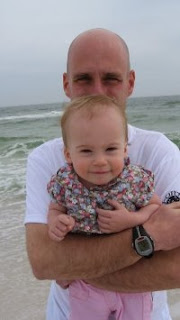 And here comes Joseph P. Wood, driving 11 hours, leaving his family in Tuscaloosa, AL while they are closing on a new house, to read his poetry to an audience of half a dozen. He apologized beforehand, pledged not to take too long, and then proceeded to rock the house with tremulous passion and great literary gift. He exposed himself through his words and cadence, fit words together into dangerous and exciting new imagery, crucified himself and then rolled away the stone.
At the end, he wasn't pushing his Twitter handle or Facebook page. Although he works as a professor, he doesn't need to publish his poetry, and he still does it the old-fashioned way, by querying small presses. The word "Kindle" never came up. There were handmade broadsheets for sale, and he sheepishly admitted he only had five copies of his collection I & We that the publisher had given him. He didn't care if he sold them, but he'd take whatever we wanted to pay.
He spent his own money and days of his life to come share his words, with no hope of compensation or audience building. And he brilliantly said, while obliquely sidestepping the need for "meaning" in poetry, "When I write it, it's mine, but once I share it, it's the reader that possesses it."
He didn't rant about his blog (where you can read how "stoked" he is to be coming to the reading) or direct us to his Amazon "Buy" Page, or even mention his website. He didn't reel in social-media followers. He didn't say traditional publishing was doomed or that paper was dead or that all agents are leeches. ("I’ll save the fancy talk–it’s about why do we believe things in poems.")
 Here I was thinking about which character I needed to kill off to gain audience sympathy, which book to write next to reinforce my brand, how to move around my price points to maximize income, how to raise my marketing profile. And I wasn't even sure if I believed in a damn thing I wrote anymore.
Afterward, he said reading always embarrassed him, because he got so passionate and put it all on the line and expected everybody to run away. Me, all I wanted to do was get more product out. Joseph, you rock. It's me who is embarrassed.
Today I just want to write one good sentence.
##
I think she was partly right. My intention was colored by "Hey, I'm a pro" thinking, although no one there would know it. Like maybe going to a poetry reading would be slumming, and I'd be sitting their smirking while plotting to earn my Kindle millions. But part of it was curiosity, and, to be honest, a need to get an infusion of passion for words. Sitting here consuming author blogs and publishing threads is a sure way to go bonkers. "Oh my God, my Kindle rank slipped, the bubble has burst!"
And so much of the current conversation, of which I am a willing participant, is about the state of the publishing industry, marketing, pricing, how often to tweet, who is signing a deal with whom, that I am not even enjoying it that much, even when I am on the verge of the biggest success of my life.

At the end, he wasn't pushing his Twitter handle or Facebook page. Although he works as a professor, he doesn't need to publish his poetry, and he still does it the old-fashioned way, by querying small presses. The word "Kindle" never came up. There were handmade broadsheets for sale, and he sheepishly admitted he only had five copies of his collection I & We that the publisher had given him. He didn't care if he sold them, but he'd take whatever we wanted to pay.
He spent his own money and days of his life to come share his words, with no hope of compensation or audience building. And he brilliantly said, while obliquely sidestepping the need for "meaning" in poetry, "When I write it, it's mine, but once I share it, it's the reader that possesses it."
He didn't rant about his blog (where you can read how "stoked" he is to be coming to the reading) or direct us to his Amazon "Buy" Page, or even mention his website. He didn't reel in social-media followers. He didn't say traditional publishing was doomed or that paper was dead or that all agents are leeches. ("I’ll save the fancy talk–it’s about why do we believe things in poems.")
 Here I was thinking about which character I needed to kill off to gain audience sympathy, which book to write next to reinforce my brand, how to move around my price points to maximize income, how to raise my marketing profile. And I wasn't even sure if I believed in a damn thing I wrote anymore.
Afterward, he said reading always embarrassed him, because he got so passionate and put it all on the line and expected everybody to run away. Me, all I wanted to do was get more product out. Joseph, you rock. It's me who is embarrassed.
Today I just want to write one good sentence.
##
Wednesday, July 6, 2011
Cheryl Shireman: Summer Book Club
Cheryl's one of the dynamos behind the Summer Book Club, in which nine bestselling writers are selling and giving away a book (free at Smashwords) to raise awareness of the Joplin MO Library Relief Fund.
I BURNED MY BRA FOR THIS? ONE WOMAN’S FANTASY

I’m a Baby Boomer. Which means that I remember bell-bottoms, Happy Days, and having only three channels on the television. I played Donny Osmond albums on a record player. My parents watched Gunsmoke, and on Sunday nights we all watched The Wonderful World of Disney. In the living room. Together. On the only television we owned. Imagine that! I remember the first time I saw Bonanza in color. I remember the first time I heard about remote controls for televisions. The whole idea seemed ridiculous. With three channels, really, how often would it be needed? I remember the Watergate hearings playing on the television when I came home from school.
I also remember watching feminists (does anyone use that word anymore?) burn their bras and march for equal rights. I grew up believing that a woman deserves equal pay for equal work and that a woman is not defined by the man she marries or by the children she gives birth to. In fact, we were told that both men and children were optional. The idea seemed revolutionary at the time. It still does. Women were mad as hell and they weren’t taking it anymore. We called it Women’s Liberation, and though it was never said, it was certainly implied (and believed in most circles) that a woman who did not work was a bit inferior to a career woman.
That was when such women were called housewives and not “stay at home” moms. Women were divided into two groups – those who worked and those who didn’t. Back then, no one thought that staying home and taking care of a family and home was work. The women of my generation wanted more, demanded more, and believed we were entitled to just that – more. We sometimes looked at our own mothers, most of whom did not have real jobs, as women who simply did not understand that there was more to life than being a mother. If truth be told, we thought they were a bit simple-minded and we secretly vowed to do more with our lives.
That was when such women were called housewives and not “stay at home” moms. Women were divided into two groups – those who worked and those who didn’t. Back then, no one thought that staying home and taking care of a family and home was work. The women of my generation wanted more, demanded more, and believed we were entitled to just that – more. We sometimes looked at our own mothers, most of whom did not have real jobs, as women who simply did not understand that there was more to life than being a mother. If truth be told, we thought they were a bit simple-minded and we secretly vowed to do more with our lives.
And yet…as this Baby Boomer looks at her life, I realize nothing I have ever done, or will ever do, is as important as being a mother. Not career, volunteer work, graduate school, or any creative pursuit. Nothing else even comes close to being a mother. Period.
One of my children lives half an hour away, another is one state away, and the third is on the other side of the world in Denmark. Yesterday, my husband and I spent the entire day with our two-year-old granddaughter. She then spent the night. As I write this, I hear her gentle breathing in the baby monitor positioned atop the table close to where I sit.
To say that my children, and now my granddaughter, have filled my life with love and joy is an understatement. As children, they expanded my heart in ways I could never have imagined. For the first time in my life, I not only understood, but received unconditional love. As adults, they are three people that I know I can always count on. They will always be there for me. Just as I will always be there for them. Can you say the same about your career?

There used to be a tv show called Fantasy Island. People visited the island and lived out their fantasies – no matter how wild (okay, not that wild – this was primetime family tv in the seventies). Not too long ago, my husband and I had a discussion about that old tv show and asked each other – What would your fantasy be? Mine was easy. If I could have a Fantasy Island day, I would relive one day with my children. My son would be 10, which would make my daughters 4 and 2. We would spend the day doing whatever they wanted. Going to the park, going to the movies, playing games, baking cookies, or just sitting on the floor playing with Legos and Barbies. I would hug them a lot. And kiss the tops of their heads. And take tons of pictures. I wouldn’t cook. I wouldn’t clean. And I wouldn’t worry about my career.
I would watch my son show his younger sisters how to do things, like he always did in his older brother sort of way. I would watch my 2 year-old daughter follow her older 4 year-old sister around the room, shadowing her every move. Just as she did, even through their college years when they shared an apartment near Indiana University. I would watch the older sister taking care of her younger sister, as if she were her baby. Which is what she called her when she was born – my baby.
Bedtime would be later than usual on that fantasy night. I would tuck them into their beds, fresh from baths and smelling of shampoo. The girls smelling like baby lotion. My son would hug me goodnight with his long skinny arms and tell me he loves me. And I would feel the truth in that. I would tuck in my girls and tell them it is time to go to sleep. I would take extra care in covering the older girl’s feet, because she always kicked her blankets off during the night. I would kiss the baby and hold her a little longer, because I would know that, as I type this she is in Denmark which makes visiting tough.
And, as I walk down the hall and turn out the lights, I would call out to all of them, as I always did… “Goodnight. Love you. Sweet dreams. See you in the morning.”
And that would be my fantasy day. Oddly enough, it has nothing to do with my career as a writer. Even though being a writer has always been my dream. My first novel, Life is But a Dream, was published earlier this year. The main character, Grace Adams, is a woman facing an empty nest and the possible demise of her marriage. Grace withdraws to a secluded lake cabin to redefine her life and try to find a reason to continue living. While at the lake, Grace not only finds renewed purpose and hope, but when things take a turn for the worse at the lake, she finds a strength she never knew she possessed. The novel is thought-provoking, sometimes frightening, and often funny (just like life). It is also, very definitely, fiction.
Even though my “nest” is empty, I am enjoying this time and this new focus on my career. I am not suicidal or lacking in purpose. My husband and I both work from home (he designs websites), we live on a lake, and our schedule is our own. It is truly a wonderful time in our lives. Sometimes I have popcorn for dinner. Enough said.
But, would my current life be as wonderful if I had not pursued career and graduate school and developed the skills I am using now? Probably not. I managed to combine work and school and motherhood. I believed I could have it all, and do it all, but to be honest – the kids always came first. And being a mother is the strongest and best part of my identity. It is the thing I am most proud of. My greatest achievement. And, once in a while, I miss those days when toys where scattered across the floor, the washer was always running, and we bought eight gallons of milk a week.
If you have children at home, cherish those simple every-day moments with them. They really will be gone in the blink of an eye – sooner than you can possibly imagine. Get off of your computer. Now. Go sit on the floor and play a game. Pop some popcorn, put on one of their favorite movies, and cuddle up on the couch. Live that “fantasy” right now. You will never be able to recapture these moments again. Enjoy them now. There is no greater gift than the love of your children. Spend the rest of your day letting it pour over you. And pour your love right back over them.
As I type this, I can hear my granddaughter waking up. I am shutting my computer off, too. Right now, I am going to go upstairs and scoop her up from her crib. She will probably wrap her little arms around my neck and ask, “Play blocks, Bomb Bomb?”
And we will play blocks.
### Cheryl Shireman is the author of Life is But a Dream which can be purchased as an ebook for 99 cents at Amazon US Amazon UK Barnes&Noble or as a paperback for 11.99 at the Amazon locations. Learn more about Cheryl at her website and blog at http://www.cherylshireman.com or by following her on Twitter http://www.twitter.com/cherylshireman or on Facebook http://www.facebook.com/cherylshireman or her books page http://www.facebook.com/cherylshiremanbooks
She will be doing a live Facebook chat on Saturday July 9th at 4:30 p.m. Eastern time at http://www.facebook.com/summerbookclub Please join us with your questions for Cheryl!
(thanks for stopping by, Cheryl!)
Saturday, July 2, 2011
Summer Book Club now free
The Summer Book Club is now free! At Smashwords, and coming free soon to multiple formats.
http://www.smashwords.com/books/view/70762
We're still donating proceeds to the library relief fund at Joplin MO, but are asking people to support the fund directly if they can. Joplin Public Library has established a fund to assist the 10 employees who lost their homes and were injured during the tornado. Please send checks to the Joplin Public Library Staff Relief Fund, c/o Jacque Gage, Joplin Public Library, 300 South Main Street, Joplin MO 64801. The library is on Facebook at www.facebook.com/joplinpubliclibrary and messages of support are appreciated.
Summer Book Club features nine bestselling indie authors. It's free. Grab it and get a tan from the heat. Or use sunscreen and merely bask. Or jump in the ocean. Whatever metaphor works for you!
###
Monday, June 20, 2011
When Things Get Bloody
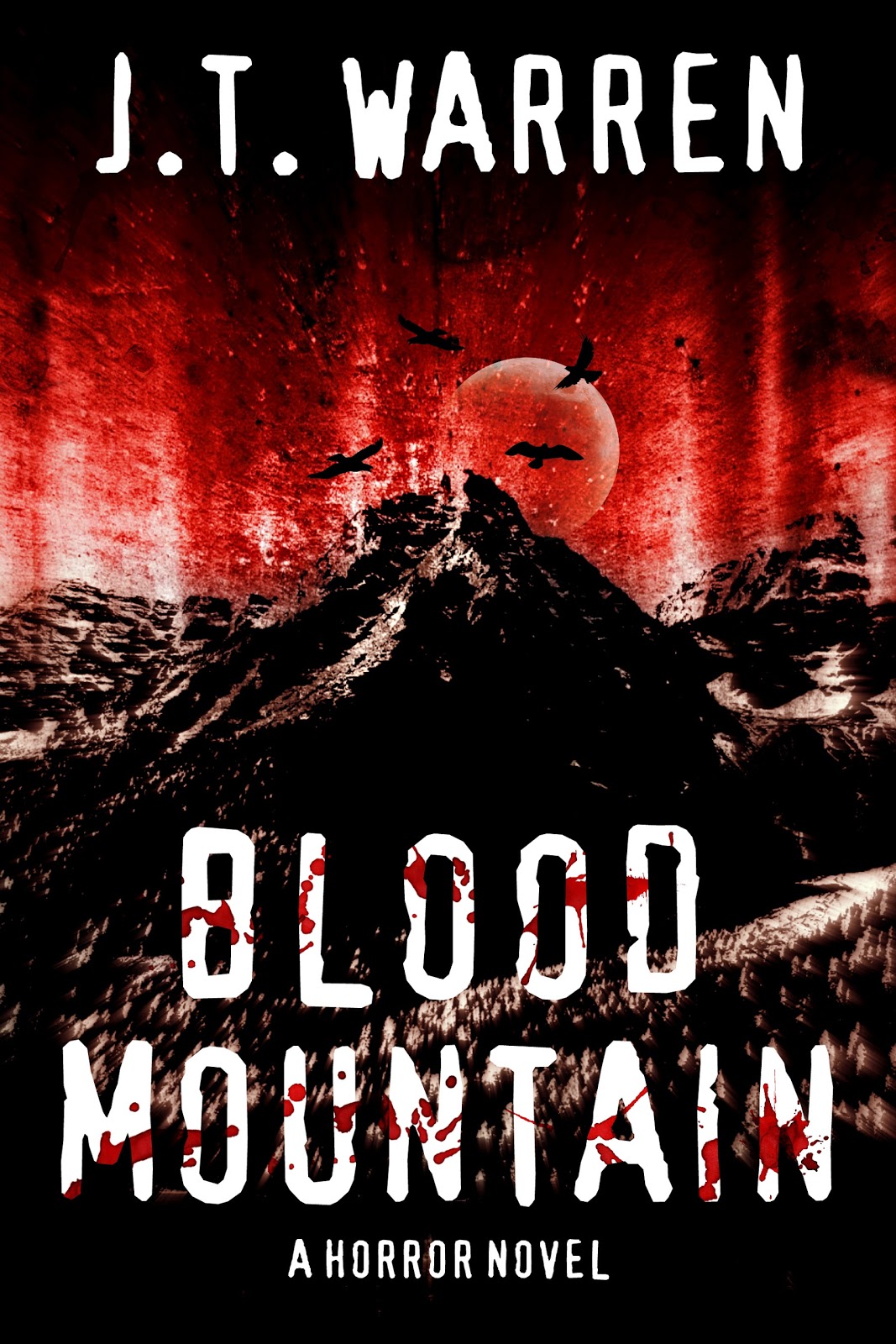
A guest post by J.T. Warren on his novel Blood Mountain:

I love movies like The Last House on the Left (especially the old version but the new one gets the job done) or I Spit on Your Grave where the unlucky female protagonist is besieged by madmen who rape her and leave her for dead but instead of surrendering, the traumatized woman finds the strength not only to survive, but to get some blood-drenched revenge. These kinds of movies and novels are often pushed aside as tasteless forays into the darkest corners of the human mind where decent people would never dare to tread.
They might have a point, but I've never been one to spend all my time with the decent folk. And when I meander down the slope into those dark caves, I always find someone there who wasn't before, someone whose curiosity got the better of them and now that they've seen what was once so taboo, they are unwilling to leave. The view from the darkness, you see, is a glimpse of genuine truth. It may be horrible and unpleasant at times, but it is honest. Many people would rather ignore that. Personally, I love settling into a cozy corner down there in the dark, waiting for my eyes to adjust, and watching what happens when people confront their fears.
That's what I've tried to do in BLOOD MOUNTAIN. There are some very unpleasant parts, some graphic descriptions, and, of course, an awful lot of blood. There's a man named Victor who believes the End of Everything is fast approaching and it is his job to help "cleanse" the world for the coming Dark Time. He wants Mercy Higgins to be his companion, his love, and he will get that love by any means necessary. He even has a shiny collection of knives to help persuade her. When Mercy and her father hike up the mountain outside of town, Victor believes it is his time to get what he wants. Mercy will confront evil and discover the depths of human depravity and cruelty. But Blood Mountain is no ordinary place. Just look at the mysterious crows that circle the mountain and seem to lust for blood. This is a dark place, no doubt, and in order to survive, Mercy must harness the darkness within her. Sometimes that can be the scariest place of all.
If you dare to travel where the decent folk would never go, please come to Blood Mountain. Don't worry, I know the trail very well, and I know when we're being followed. Stay close and I promise you'll make it to the end. But you may get a little bloody.
###
Saturday, May 28, 2011
Five sips of Indie Kool-Aid
One of the core themes of my inspirational guide The Indie Journey: Secrets To Writing Success is "Don't expect tomorrow to look like today." A lot of indie writers are making big decisions based on the expectation that the world will remain exactly the same, which is contrary to the experience of every one of us who have lived on this planet. Here are things that could and almost certainly will affect the indie future:
1. "I'll get 70 percent forever!" Yes, and those tech stocks in the 1990s just kept shooting through the roof, didn't they? The housing market of four years ago was unstoppable, too.
2. "There will be more and more markets in the future, so competition will keep retailers offering good terms." There will be one winner who basically sets the terms for everybody. Look at Apple for music and games apps if you need convincing.
3. "Library lending opens a whole new market!" Well, actually, it may CLOSE markets. If people can check out your ebook from home, and a library only needs one digital copy, you will be very lucky to get one sale per library. That's a lot of libraries, but also no reason for anyone ever to buy your book again from a retailer.
4. "Advertising will support ebooks so companies will pay writers to be featured in their books." It's likely advertisers will pay retailers and distributors, not the authors. No one knows what this will look like, or how revenues will be split--or even if there will be writer revenues at all. Think of the YouTube music video where you sit through the 15-second ad first.
5. "So-and-so promised all indie authors will be rich." We usually hear what we want to hear. Lottery stories are cool. But the lottery is only cool because almost nobody wins it. Including you and me.
Mantra: Since the future will be different, why not be happy now and be prepared to be happy tomorrow?
###
Saturday, April 23, 2011
Indie Flip Side: The Fallacy of "Just Writing"
(Note: This is NOT a judgment of someone else's decisions, or a declaration that a traditional publishing deal is "wrong," or that I think anyone makes a "mistake" by accepting a traditional publishing deal. This is simply a philosophical exploration of consequences of paths you choose in your life, and what you want. If a publishing deal gives you what you want, you absolutely, positively should take it.
I refer to Amanda Hocking for the sole reason that she is the current symbolic lightning rod. Two years ago, it would have been Boyd Morrison. Last year, J.A. Konrath, and in two months it will probably be John Locke. While "Scott slams Amanda" would get me more blog hits, I'd rather take the post--and the entire blog--down than suggest such a thing.
I can't make those choices for you or anyone else, only myself. And I won't even know until the next one is offered, and then I will only know it for that one deal at that time for me, not all deals for anyone at any other time. That is the point of what follows. I thought it was clear but I apparently failed to communicate it well)
The discussion (and it is now a discussion, not an "argument" or a "debate") on whether writers should choose the indie or the traditional path, or both, usually focuses on money alone. That's odd, because money is usually one of the least valuable considerations when you are choosing how to spend your life. Clearly time is the most valuable resource, because it's non-renewable and finite, unlike money.
A successful writer friend recently gave me a "hot tip" on an emerging book sector--it was all the rage at an international book fair, and now publishers have the stats to back it up. Stats mean sales people can buy in, which means editors can spend money, and writers can get book deals, and everybody's happy. Right? He was trying to get me in on it as an act of generosity, with connections in place and everything. And I thought about it, because that siren song of "Your name on a REAL BOOK" is still pretty melodic. I could do it. I have an agent and enough success and this market is new enough that my old genre sales numbers wouldn't matter.
The next morning I woke up and thought, "No way in hell." Think of the drama. First off I'd have to explain it all to my agent, come up with an outline and sample chapters, wait to see if it sold, then work with editors and PR department and then wait up to a year for anything to happen, all the while getting approvals and requests for revisions. Dozens and probably hundreds of emails and phone calls. Just thinking about it exhausts me, when my biggest worry today is whether I should plant beans or plant spinach.
When compared to just typing and publishing as I do now, a big manufacturing process is not very appealing. That's not to say a good editor can't greatly improve a book. But you know what? I am already an editor. I edit other people's books, and I am probably better at it than some who are doing it on salary, because I'm a writer and not just a reader. That's not ego, that's 15 years of experience.
I have to laugh every time someone quotes Amanda Hocking saying she took her deal so she could "just write." I saw on a blog that her assistant had turned down a request by the blog for an interview. So, aside from the layer she's now installed from her former real life when she dealt with the book bloggers who were important to her success, she is managing an assistant, as well as the "lawyers, accountants, and financial advisors" that success brought. And an agent, and probably several agents if you count film and foreign rights, and Hollywood people for the movie versions. And at least one editor, until those foreign rights sell, and then there are multiple editors.
And despite the oohs and ahs over a $2 mil contract, that is not a lot for four books/English world rights when the superstars earn $10 mil per book. By industry standard definitions, she is an upper midlist writer, which means she will still have to do a lot of promo work, which means dealing with a PR department--and book signings, events, travel, and she will be working harder than ever to run a business, because now it's not as simple as watching it dump into her bank account now. She is managing a staff, or perhaps a better word for it is an "empire." And even if she continues self-publishing on the side, she can't remove those layers and obligations and interruptions.
Before you light the torches and storm the castle, please note I am in no way demeaning, second-guessing, or wishing Amanda Hocking ill--we have traded emails in the past and in her social media presence she is clearly sweet and compassionate, and I wish her all continued success and happiness and nothing less than utter joy. But I suspect her life just got more complicated than ever and the one thing she can no longer do is "just write." Perhaps there's a reason J.K. Rowling and Stephenie Meyer went dark.
People overlook the value of quality of life and how time is spent. I can't speak for anyone else, but for me, I realize lots of money would NOT make my life "better." Just having to buy the next used car fills me with fear--choices! My wife and I tried to picture ourselves in the perfect vehicles for us, and we agreed--for me, it's the rusty 1986 Isuzu pickup I already own. It's my dream car, I love driving it, I like my self-image when I am driving it (a working-class hero), and it's useful. I am incredibly happy when I stop by the landfill to salvage firewood or get a load of manure from the neighbor's pasture.
A boatload of cash would just create more burdens and deplete the one finite resource that is most valuable--time. Another friend of mine is struggling with this same situation--whether to go corporate and what the gain would be, when he's already living the life of his dreams.I'm already burdened by the money I do have, because it begets desire. I am going to find the cheapest potatoes in town, buy a truckload, and drive it to our local Hunger Coalition. I trust God will fill that hole back up in my bank account, because She's done it over and over. I don't say that to brag about how humble I am, but from the acute awareness that all the goodness that comes to me is an obligation to return goodness to the world.
There's no way a big fat book deal would improve my life. I don't care how much money it is. It would be a step backward. Because I am already doing everything I want on my own terms, and that is all I ever wanted. Going that route would be someone else's (many someones) routes. I'd go from being a business owner to a temp contract employee.
That's not to say I'd never take a corporate deal. The point is, I don't need to. Just the offer from my friend made me anxious and unhappy, because it sounded like the sort of opportunity I should leap at, and that I should rush before the crowd gets there.
But, guess what? I am quite happy outside the crowd. And I've had my best success, luck, and happiness following my own path. That doesn't mean I am isolated, because without you, my writing and my dream becomes rather meaningless. But we're connected precisely because I am outside the crowd, not because I'm in it.
I am already doing everything I wanted in my writing career--writing stories for a living. My life wouldn't be improved by a shinier car or a third house or a bass boat. While there is a "next" to shoot for, there's not a "better" or a "next level." When you're living a dream, why leave it for someone else's dream?
If your dream is $2 million, there are tons of millions out there. If you want to spend more time on the phone with strangers talking about money, that is possible, too. I just hope each of you are happy. It's the hardest thing in the world to be, and a thing writers often seem least capable of achieving.
###
Tuesday, April 19, 2011
A Book Bucket List from Guido Henkel
 A guest post from Guido Henkel, a indie author who is generous in sharing technical information as well as delivering the spooky fun Jason Dark series)
As you are reading this, I have just released Curse of Kali, the tenth Jason Dark supernatural mystery that I have written. Taking place in Victorian England, it is once again a riveting mystery that our occult detective has to solve — though this time he has some help from a very, very famous detective of his time, also.
Releasing a book is always a little like the end of school. You take a breath, sit back and just kick back for a tick, enjoying the moment with a clean slate.
For me, this usually also means I need something new to read. The past weeks have kept me busy with rewrites, edits and the preparations for the launch and I did not have a whole lot of time to read other than my own stuff.
So, as I am trying to decide upon a new book, — most likely one I’ve been pushing off for too long — it occurred to me that there should be some kind of list of books that everyone should read. I’m not talking about the classics like Dickinson, Shakespeare, Kafka or even books like Dracula where it is implied that everyone has read them. No, I’m talking about books that I have read over the years and that impressed me so much that I would like to recommend them to you with my warmest regards. They are the books I would not want to have missed out on. Of course, such a list can never be complete and reflects my own personal taste, so feel free to suggest other books that you find too valuable to be missed.
So here goes my Book Bucket List for you in no particular order
- The Lord of the Rings, by J.R.R. Tolkien
- Mars, by Ben Bova
- The List of Seven, by Mark Frost
- The Sword of Shannara Trilogy, by Terry Brooks
- Brimstone, by Douglas Preston and Lincoln Child
- The Horatio Hornblower Series, bt C. S. Forrester
- Crime Beat, by Scott Nicholson (ed. note: I didn't put this in here!)
- There will be Dragons, by John Ringo
- The Seance, by John Harwood
- Memoirs of a Geisha, by Arthur Golden
And then last, but not least, Curse of Kali. Yes, I know it reeks of self-promotion but if you want to know how Jason Dark and Sherlock Holmes met for the first time in their lives, you have to read this mystery. If you have only half as much fun reading it as I had writing it, we should all be in for a treat.
###
Wednesday, April 13, 2011
The Top 100 Ego Trip
Thanks to everyone who helped Liquid Fear break the Kindle Top 100! We're in the 70s tonight as I write this. For some reason, this time around seems a lot simpler--I did a launch but it actually made its rebound run while I was in the wilds of Kentucky and away from the Internet for three days. That means YOU did it, not me.
I was sitting in the parking lot in my rusty old truck, picking up wifi from a coffee shop when I saw it had cracked Top 100. I high-fived my daughter, but she hasn't really been impressed since she saw me at #1 in Christian Science Fiction & Fantasy last year, ahead of Stephen King and--even bigger to her--CS Lewis. Now it's just that thing Dad does. I look out the truck and the world goes on--no one really cares! They're on their own trips.
Since this was so painless, my wife and I agreed to picture the Number 27. It's a square root of three and has cool multiplication factors, so it's more fun to shoot for than 29. Disintegration hit #30 at the end of last year. It slid since then, so I know these things are ephemeral, but I also know to just enjoy it, know it will end, and know it will come back. So #27 is the goal, since I like having goals.
I was thinking today that the Amazon real-time rankings have been one of the worst things ever for writerly ego--we can tell whether people love us or hate us at any moment of the day, but worst of all, we can tell HOW MANY OTHER WRITERS YOU LIKE BETTER! No number is ever good enough. If you're #1, you know somebody's gunning up behind you. If you're 300,000 (I have a book or two way done there) you think you are crud, even if the books are awesome (and IF I WERE YOUR MONSTER is a neocult classic).
And the numbers really don't validate anything, except other numbers. They don't mean a message is valuable, or good, or helpful, or in any way instructs us or redeems the human race. The rankings have totally removed quality from the conversation. Now it's "units sold" and "rank" and "income" and I'm probably as fixated as anyone, because I run my business like a conductor, keeping every product humming in tune to fill its role in the symphony. When a lesser-known book hits a sour note, the music seems off, and it's hard to enjoy the many other wonderful harmonies. Just like when you finish writing a book--you're more likely to obsess over the thing you didn't quite nail than the hundred things that tied up nicely.
I don't know. Today I am in the Top 100. I nailed it. For a day, at least, it's in tune. Life is good. Thanks for listening.
###
Tuesday, March 8, 2011
More reckless predictions & Liquid Fear
My latest wholly uninformed, wildly irresponsible, and less-than-rosy prediction on the future of ebooks is posted in my latest Indie Reader column.
A mini interview up at the wonderful World of Books run by Babs.
On the final stretch run of Liquid Fear. I suspect it has one more chapter. I will finish it tonight. My reward for the near-finish is to go get a truckload of cow manure. Hype for the book can soon begin, though the novel may fall apart during revisions.
###
Thursday, February 24, 2011
Transparent Lovers out
Good indie hero Brian Rathbone hosts me in an interview at Podiocaster (20 min)
Well, in all the madness I forgot to promote this here book. Private investigator Richard Steele must solve his most difficult case ever--his own murder--while torn between women on opposite sides of the grave.At Amazon and BN and Smashwords

Well, in all the madness I forgot to promote this here book. Private investigator Richard Steele must solve his most difficult case ever--his own murder--while torn between women on opposite sides of the grave.At Amazon and BN and Smashwords

Also check out my guest blog at indiereader.com
Thursday, February 10, 2011
Indiereader.com
My first post in my regular blogging gig at Indiereader.com is now live. I will be doing most of my "indie commentary" there, much of it geared toward the opportunities of the new era in connecting readers and writers. The "make fun of New York" phase is pretty much over for everyone, and already things are settling out so that everyone goes on with their lives as best they can. Smart writers will adapt and smart publishers will adapt. Many, if not most, will fail. Every evolutionary phase is met with waves of extinction.
Since wiser bloggers are talking about indie writing and indie publishing, I will not be providing much nuts-and-bolts information or industry analysis. You already know the drill if you're a writer: Be as professional as possible in every single phase of your cottage industry. And if you signed with a publisher, hold it to that standard, or else get your rights back as soon as you can, and then do it right.
I'll also be doing some teasers for my April 1 launch (note: see that subtle teaser alert!) in the weeks ahead, as I frantically race toward deadline. It's going to the wire. Luckily, the book is about fear, so I should well be in the mood.
###
Tuesday, February 1, 2011
Disintegration signed copies with FREE e-book!

E-book of the Day is The Red Church:
If you care to tweet: The Red Church. A boy, a sheriff, a haunted church. #kindle http://amzn.to/d0Lsa6 #nook http://bit.ly/gaVlOW
Thanks!
###
Tuesday, January 25, 2011
Published at 72
In all the hype, numbers, and money a lot of people are throwing around in the digital era, it's good to remember the basic act of communication that the entire dream is built around.
Case in point is Elizabeth Egerton Wilder's Spruce Gum Box, which she released on her 72nd birthday as her first novel. The work of historical fiction took her several years, and in the "old days" she might never have been able to fulfill her dream so easily. Sure, it doesn't appear to be tearing up the charts, but visualize the power of her work finding even one reader, much less several, much less more.
And that book should be online in perpetuity, finding the audience it needs and deserves. I haven't read it and can't speak to quality, and "quality" is a matter of great debate as writers chase some arbitrary "professional" standard. Is direct emulation of major publishing even valid and worthwhile anymore?
The only standard to which one should aspire is to tell your story as best you can, and then turn it over to whatever readers you are fortunate enough to find. Way to go, Mrs. Wilder.
###
Saturday, January 8, 2011
Why Did I Read That? By Guido Henkel
(Today's guest post is by Guido Henkel, author of the Jason Dark series. See the first, Demon's Night, in multiple formats at Smashwords)

As I finished reading Moses Siregar’s “The Black God’s War” and began looking for a new book to read next, for some reason, I asked myself the question, what is it that makes me like and favor certain authors?
The entire world fawns over Stephen King, for example, and each of his books turns automatically into a bestseller. While I don’t dislike King, I do not consider myself a fan of his, either. To me, he wrote good books and bad books, and among them, a handful of true gems. Too often, however, I feel as if he’s getting lost in his own stories. I once said that if a director needs 3 hours to tell a story, then he’s doing something wrong — my case in point at the time was James Cameron’s “Titanic.” I still stand by that sentiment with maybe one or two exceptions, such as “The Lord of the Rings” movies and stories that contain so many side plots that it would actually harm the film if it were cut down for length. There is certain epic material that commands more length, clearly, but the story of an Atlantic crossing and the included sinking of a passenger ship is not one of them.
To me, the same is true for books. If an author needs over 1000 pages to tell a story that others manage to tell in 700 pages, I am getting dubious. Despite his commercial success and critical acclaim, to me King makes the same mistake over and over again — he strays. I recently read a book called “The Swarm,” which made the same mistake. Thunderously thick, the book takes almost a third of its length just to set up the story’s actual premise. That ain’t right… Don’t waste my time. It is every bit as precious as yours.
So, what is it then that I do like about certain authors? To me, it is usually a case of intrigue. I don’t care much for literary gimmicks. If an author feels he has to prove to me that he can find the most exotic words in his Thesaurus, he makes a huge mistake. Not only does he take me out of the experience of the story because the word sticks out like a sore thumb, he also belittles his readers who might not be familiar with the word. I am not advocating dumbed-down writing, but I think there is a fine line somewhere along which an author can still show his prowess and connect with his readers without talking down to them.
 Sure, there is a market for so-called literary books, but when it comes to commercial, mainstream writing, I think finding the right tone is crucial.
The same goes for metaphors. Metaphors are great when they work, but some writers have a tendency to force them, pulling noticeably at straws, just to come up with something that might seem imaginative. To me, that is bad style, plain and simple, regardless of genre, on par with convoluted sentences that make you reread them three times to figure out their meaning. Why would someone write like that?
To me, good writing is like good verbal storytelling. I have never met a really good storyteller who speaks in super-injected sentences that make you ask him to repeat them, just so you can fathom out what it was he was trying to say. No, a good storyteller makes sure the meaning gets to you before he even says it. A good storyteller hooks you and takes you onto a journey. Imagine, someone told you a story that would suddenly take you down paths that are entirely irrelevant to the story, unraveling infinite details and story facets that lie a hundred years before the actual events, including people who have been dead three generations before the story actually took place and have nothing whatsoever to contribute to the plot… If you’re anything like me, you would simply tune out.
But books are different than verbally told stories, many people will say. Well, that is certainly a point that is up for discussion, and it is one point I honestly beg to differ. Are they really different, or is this just something the book critics want us to believe? That good books must have superior literary aspects? Should I really feel bad that I actually enjoy reading Clive Cussler’s adventures, easy-on-the-reader as they may be?
You may disagree, but in my opinion, good books are every bit like stories that are being told. They are to the point. They stay on topic. They hook the reader and pull him along. Most importantly, though, to me, a good book is written in the language of its readers. It makes you forget that thousands of others may read the same story. A good book makes you feel that it was written specifically for you!
There are masters out there who do an amazing job at this. When I first read Mark Frost’s “The
List of Seven,” the book instantly became my all-time favorite. Not because it had frilly language, not because Frost tried to impress the world with his vocabulary. All that is there in the book, but the way he put it all together made you forget everything around it. The story and the language were one, he made masterful use of the most powerful tool any writer can wield. He used magic! The magic to make me forget I was reading a story, the magic to conjure up images in my mind and dazzle me with deviously schemed plots. So much so that when the book was over, I sat breathlessly and asked myself, “Oh my god, what am I going to read now, because everything else will feel bland from here?”
To this day, about 20 years and uncounted books-read later, “The List of Seven” is still the epitome of a great book to me. Untouched, religiously revisited every other year or so, it is the book I wish I would have written.
###
Sunday, December 12, 2010
Why NYT list and BookScan data are worthless
NYT to report e-book sales! You can pay to get your own BookScan data! Hooray! Indie authors and e-books are now legit! We won!
Dude, put down the coffee cup and slowly back away. In prehistoric times, pterodactyls ruled the sky and I'd get on the phone to Ingram's warehouse and see how many copies of my books had shipped. It sort of seemed important, although I never knew what to do with the data. And what agent, editor, or author wouldn't want to say, "I'm a bestseller" and "moving tons of units"?
But if you are an indie author hoping to get some attention, or an underground success planning to go blinking to the surface world, you might want to temper expectations. Or better yet, not waste a second of your time or energy.
Firstly, the NYT bestseller list will only report major publisher data--many indies and small presses will not be reported. You need different ISBNs for each format, and you need it all to be aggregated by some central processing unit. Who will control that? The Times? The publishing industry? BookScan? And who is going to be volunteering the numbers? Amazon, which probably has 80 percent if not 90 percent of the e-book market? Yeah, right.
If you want to go to all that trouble just to appear on someone else's lists, be my guest. Disintegration doesn't have an ISBN at either Amazon or B&N. It was a bestseller, hitting #30 in the Kindle store, which definitely put it in the top 50 of e-books worldwide. For only a time, but still...as my daughter says, "Once you are a bestselling author, you are a bestseller forever." Hardly anyone will know it was a bestseller, even the people who bought it. It doesn't even have an ISBN. Amazon and I are the ONLY ones who know how many it sold. And neither of us are telling.
And the people reading the NYT are not the indie author's audience--they are reading a newspaper, for Jiminy Cricket's sake. They might as well etch it into a clay tablet and send it out via a fleet of carrier pigeons for all the good it will do. Look, the people who were most excited about that announcement, as evidenced by TweetStream, that cool-a-meter of our times, were the entrenched industry types at every level who have so much invested in the continuation of their careers. It's understandable, but it doesn't mean you as an indie author should fight against the currents of time to join them.
The NYT list has been bought and sold for decades--that data is based on advance store orders, which means major publisher push and co-op money paid to big booksellers. Haven't you ever wondered why books show up as bestsellers before they are even released?
This is all a shell game, high-stakes ego moves, a valuable tool or a cudgel depending on your needs as a publisher or bookseller. Sure, some people wander into bookstores and blindly grab the first book they see, and booksellers stack bestsellers in the front of the store, and everybody goes through the motions. I'm surprised there isn't a Patterson store yet, wall to wall offerings by The James Gang.
Bestsellers are made, not born, often even years in advance of their publication. Janet Evanovich doesn't sign a multi-million-dollar, multi-book contract to gather dust, spine out, on the E shelf in "Mystery." How many "surprise bestsellers" have you read about? How did Stephen King just happen to get a copy of Justin Cronin's "The Passage" months before publication? Why did the publisher decide to print 10,000 advance review copies of The da Vinci Code?
Besides, what does the term "bestselling author" mean anymore? I've seen indie authors on the Internet shouting, with multiple exclamation points, "I just hit #19 in the category of Greek History: Ancient Pottery Shards!!!!" There's even a guidebook out there on how to trick up your keywords to rank high in obscure categories so you can be a "bestseller."
BookScan? Measuring point of purchase hard-copy sales at a limited number of outlets? What is that good for these days? Where's Walmart, the airports, Christian bookstores, specialty shops, hand sellers, the drug store that sells local books? Yes, there is a "geographic tracking," but what do you care? Say you're selling lousy in Buffalo. Are you going to hop in your car and drive up there and do a book signing? Can't your e-book squeeze through the frozen ethernet of the Great North?
The bestseller list already exists--there are only two. Kindle and B&N. The Kindle bestseller list IS the e-book bestseller list. No one in NY will admit it and you won't read it in PW. That's not sexy, and major publishing is at an uneasy detente with Amazon at the moment. Amazon has never revealed their data on anything significant, only in the loosest of terms that makes it look good (i.e. "We sold out millions in seconds....")
As an indie author, it is against your best interest to even use ISBNs. They are not required by either Amazon or B&N. The only outlets that require them right now are Sony and Apple iBookstore, and those markets are hardly worth investing the $10 an ISBN will cost you at Smashwords. Oh, yeah, everyone wants their own ISBN for each format and their store, and it has to be different from the ISBN of the print version(s). Seventeen flaming hoops, lots of cost and inconvenience, and all you gain is the ability of corporations to easily track you? Yeah, I'm jumping on that one.
The NYT list is just one last attempt to make NY valid in the new era, and it might have been interesting a couple of years ago, and maybe there's a long shot of a Hollywood sale--but I suspect more movie producers own Kindles than read the NYT. It gets attention because of "tradition," but what is tradition worth right now? More importantly, what is tradition worth to YOU? The most successful indie authors I've seen don't even know what tradition is, nor do they care.
This is data for the publishing industry. I've said repeatedly, if you are an indie author, you are not in the publishing industry. You are in the YOU industry. You don't need to view the publishing industry as competition, not yet, but you might want to consider whether you invest resources in their industry or in your industry.
Just typing all this up kept me from working on my current project, but maybe you will buy my books, or learn something, or tweet me, but in a way, this was energy wasted on tradition. Picking up the hammer to knock down a wall is tedious when you can simply walk away from it, go around it...or fly over it.
If all you ever wanted was to call up Mom and your sixth-grade English teacher and say "See, I told you I'd make the list," then I say go for it. For everyone else, you are better off writing that next book and getting on the list of your reader. That's the list that matters.
###
Friday, June 25, 2010
Save the indies? We could have saved each other
I knew this was coming. Again. Remember when the creeping encroachment of chain stores led to a public outcry of "SUPPORT INDIES AND SAVE LITERATURE!!!"? Well, maybe the cry wasn't all that public, emanating mostly from bookstore owners.
And guess what? Indies died by the dozens. They expired like whales on an oil-infested beach, leaving the stench of recrimination on our collective brows.
The next evolution of the outcry is "SUPPORT INDIES AND SAVE REAL BOOKS!!!" This is the case made by The Regulator Bookshop. Basically chastising people who like e-books, sneering and snubbing, creating an elitist argument veiled as a populist uprising. I wish I could be sadder for you. Actually, I am sad. But it's the kind of sadness felt over a long-ago high school crush, or that job where you never got promoted, or that old swimming pool that used to have a diving board.
I am sorry you will have to find a new career. Really. But you are not alone, because I expect the chains will be following shortly. You survived Borders but you can't survive electronic tablets and instant, wireless communication. You didn't do a thing wrong. You will die for one reason only: you are not giving your customers what they want. Thrash and moan but you won't change that. I can't change that.
Sure, I can drive three hours and buy a few books and you can pay the electric bill another week. But the books will cost more than I can afford, and my philanthropy extends primarily to those who are truly starving and not those who might theoretically starve one day. Your books cost more than I care to pay, anyway, because all I care about is the content and the experience, not the package, that wonderful R-book that will cost me two-and-a-half hours' pay and has many, many hands chipping away nickels between the author and my eyeballs.
I do support my local indie when I can. I do buy R-books there, and it's an emotional exchange, not a need. They sell my books. I send people there. Simple.
The local store took out books to put in a yarn section, and now sells gift items and jewelry as well. It's not just a "bookstore" anymore, because the owners realize change equals possible survival. They aren't making people feel guilty for not wanting something they don't need--they are giving them things they want. They are even exploring setting up an e-book shopping experience.
Still, I can't support you, Regulator. You probably don't remember me. Five or so years back, I made multiple book-signing trips across this state. I called you and wrote you emails. I sent you book cover flats and press releases for each new book, asking to set up a signing at your store. I figured since I was a notable North Carolina author, you'd be proud to have me and my books in your store. Because indie bookstores are great at hand-selling and supporting local authors, right? Heck, I promised to do the publicity, since my friend was editor of your local paper. You never answered. Nothing.
I once even drove around downtown Durham looking for your store, so I could meet you in person and maybe buy an R-book or two. I couldn't find you. The cry of "Shop indie" no longer means supporting local bookstores, it means supporting independent writers. Your very battle cry has been usurped.
You ask us to support you and give to you and save you. I wish you had given just a little so we could have helped each other. Maybe I would be even sadder today. Instead, I will just upload my e-books and partner with the people who want a mutual relationship. I don't care about R or E books. I care about MY readers, whatever letter they put in front. Your store doesn't have my readers because I was never in your store.
But you won't be lonely, Regulator. You will find plenty of company in the unemployment office, in the line of agents and editors who insist on artificial preservation of their industry. You guys can kill a little time together, reminiscing about the good old days when books were books and everything was real.
Me, I am going where stories are stories and everything is a dream.
###
Wednesday, June 16, 2010
Publishers aren't as dumb as people think
(Reprinted from guest post at Megalith Books)
Most observers and even some authors believe the major publishing industry has been slow to respond to the electronic-book era. True, the industry is struggling with pricing while trying to protect hardcover sales and has not been especially welcoming of digital books, especially those that compete with their higher-priced versions. But they have not been putting their heads in the sand, either.
Publishing contracts of this century almost universally grant publishers the electronic rights to the content, and those clauses may have seemed innocuous even two years ago, when e-book sales were negligible. The clauses that were afterthoughts returned the electronic rights to the writers when the book went out of print, back when that term was more cut-and-dried.
But, increasingly, the publishers are setting clauses that lock in the license as long as some minimum sales levels are reached. I don't get a lot of contracts these days, but the ones I know about generally have numbers like "If ebook royalties reach $100 in a six-month period, the clause automatically renews." In other words, if some laughable minimum of sales is met, the publisher retains the rights. Possibly forever, if the clause keeps renewing.
That is literally indentured servitude that traps writers over an entire career, at least those unlucky enough to have the moderate success needed to stay trapped by the clause. Ironically, those writers who are most deeply invested in The System are the ones who are going to be in the worst shape in five years, and even worse in 10 or 20, their retirement years, when they will be getting nickels instead of dollars.
You'd think agents and authors would be screaming about this development, but the ones who are most invested in The System are the ones most actively in denial. Look at the agent blogs--most are talking about how challenging the current system is and how lousy the quality of submissions are (when they are not actively making fun of some poor author's query letter), not how their roles may be diminishing, and very few (I've only found one) will admit that the current ebook clauses are suicide. I know agents have fought these battles with publishers, insisting on better e-book terms, but at the end of the day, you just get the most you can right now and take your 15 percent. Any agent who did otherwise would be either looking for job or heralded as a true advocate of the author. In other words, blackballed by New York.
In today's publishing environment, you still need an agent and the agent still needs to get a significant deal. It makes sense for them to do the best they can right now and not worry so much about the long term. Unless the client is a blockbuster, the client likely will not be earning royalties or a lifetime revenue stream anyway.
Even if you are an e-book phenomenon, you will do better if you have shelf presence. Take Boyd Morrison's deal for The Ark, after making a name selling $1.99 e-books. He was signed by a major publisher and now his e-book is $11.99 and he's not making much more per sale than he did back then--and the poor consumer is expected to pay six times the price. By Boyd's own admission, the biggest edits were some minor stuff and the changing of one character's name. Where's all that extra money going and what value was added?
Publishers are great at distributing books and can afford to ship free copies to the numerous book bloggers, who often seem to be reviewing the same book at the same time. That's been the carrot publishers are still holding out while they grip the stick to beat authors over the head. "You're not a real writer and no one will review your books" is still a powerful tool.
If publishers use the carrot to lock down long-time e-book rights, and ebooks become even 20 percent of the market (as is predicted by 2015), then those publishers have just made major bank, and will continue to do so as e-books increase in popularity. I don't see anyone predicting the genie will be shoved back in the bottle and all this new-fangled technology will get boring. After an e-book is published, it is nothing but content, and the publishers will be skimming both the cream and the milk, with little additional work besides dipping the ladle. As the e-book market grows, those publishers who have hoarded the most content will be on Easy Street. Those writers who gave the most away will be in the soup-kitchen lines, or, if they're lucky, they will be the beneficiaries of charity auctions at fan conventions.
Agents are debating whether it's better for the writers to get 15 percent of list or 25 percent of net--well, what about 70 percent of gross? How about that, Mr. Agent and Ms. Publisher? (And, by the way, you can trim 15 percent off that 15 percent, so the writer is getting around 13 percent.) And when e-books reach their natural price range of $1-$5, those writers will be getting a quarter a copy and have no control over anything, while publishers will have an easy, ongoing revenue stream because they essentially own the content (you can call it a "license," but if it's for a rock-bottom e-book floor to keep the clause active, then it will last forever).
Sure, publishers will be happy to return your rights once the content is worthless, meaning your career is dead and every drop has been squeezed from the teat. Of course, agents will get their spillover as long as their names were on the original contracts.
The odd thing is how little the word "author" appears in all this discussion of "The Future of E-books." But, then, most authors went into writing because they were lousy at math. And, I suspect, they like getting beaten with sticks.
-------------------------
Scott Nicholson is author of 10 novels, including Drummer Boy, The Red Church, The Skull Ring, and They Hunger. He's also written three story collections and six screenplays. He works as a journalist and freelance editor in the Blue Ridge Mountains of North Carolina. His web site is www.hauntedcomputer.com.
Thursday, May 20, 2010
Guest blog: Christa Polkinhorn

Love of a Stonemason
Available as ebook on Amazon.com and on Smashwords
The young painter, Karla Bocelli, is no stranger to death. When she was five years old, she lost her mother in a car crash in the south of Switzerland. Her Peruvian father lives at the other end of the world, and a year ago, her aunt and guardian passed away. Now, at age twenty-four, the talented artist has another close encounter with death. On her way to an art gallery, she almost gets hit by a speeding car.
As if this wasn’t fateful enough, Andreas, the driver, turns out to be a sculptor and carver of tombstones. In spite of his profession, Andreas is anything but morbid. Quick-tempered and intense, he exudes a rough-and-tumble energy. Karla is intrigued by the fierce young man with his green cat-eyes and invites him to an exhibition of her paintings. This marks the beginning of a passionate relationship and a journey to selfhood for Karla. After a tumultuous start of their relationship, Karla comes to see in Andreas the "rock in her life," the perfect antidote to her fears of abandonment and bouts of depression. Andreas, however, wrestles with his own ghosts: an alcoholic father who abused him as a child and his own fits of anger. Together, the two artists must confront the demons that haunt them.
Love of a Stonemason is a story about the struggle of two artists with their past, their family, their creativity, and their love for each other. Told from the point of view of Karla, it depicts the world through her painter’s sensibility. It takes the reader on a journey full of sights, smells, tastes, and sounds from the south of Switzerland to Italy and the Peruvian Andes. The novel will appeal to lovers of art, to readers of romantic fiction and to people interested in foreign countries.
---------------
Christa Polkinhorn, originally from Switzerland, lives and works as writer and translator in Santa Monica, California. She divides her time between the United States and Switzerland and has strong ties to both countries. The tension and excitement this "double life" creates informs her work.
###
Subscribe to:
Posts (Atom)